The Propertyless Citizen.
How the collapse of the Lockean bargain is dissolving the British social contract.

In the autumn of 1647, with the king defeated and the constitution of England dissolved into open question, the officers and their men of the New Model Army found themselves gathered at the Church of St Mary the Virgin in Putney. Their gathering together to argue in the new order they found themselves in concerned who would now constitute a citizen. The grandees, led by Cromwell and his son-in-law Henry Ireton, held to the position that had been the orthodoxy of English political life for centuries. Only those with a fixed and permanent interest in the kingdom could be trusted with a voice in its governance. As such, in Ireton’s view, property was not just an economic fact but the foundation of those who could be entrusted with governance of the kingdom due to their foundation within civil society. Without property, a man had nothing to lose, no stake in the order of things, no reason to defer to the laws that bound the propertied to each other. Against Ireton stood Colonel Thomas Rainsborough, who delivered the line that has reverberated down the centuries: “the poorest he that is in England hath a life to live as the greatest he.”
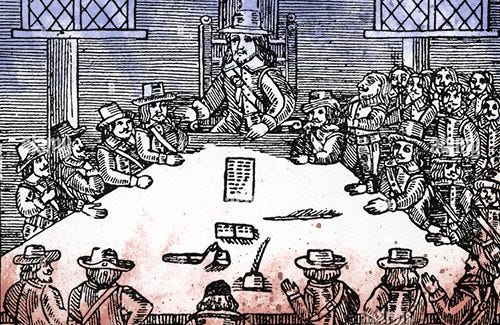
We have lived some near 400 years in the aftermath of that gathering of men. Modern liberalism, as claimed by Harold Laski, was built by the reconciling of Ireton’s claim with Rainsborough’s. The reconciliation was achieved not by abolishing property but by extending the conditions under which each and every man might acquire it. The bargain at the heart of liberal democracy, in Laski’s view, is that the state would protect what a man had earned by his effort. To be secure in what he had built was to be a citizen in the fullest sense, capable of independent judgement, beholden to no master, possessed of standing in his own community. That relationship developed and held more or less for three centuries. However, it is now beginning to break down before our eyes, and the consequences for British society are both more profound and historically resonant than the ordinary discourse on the housing crisis delves into.
The seventeenth century foundation
For us to understand now what is being risked, we have to begin with the political theorists of 17th century England who first fused together property and citizenship into the foundation of the modern state. The argument was not invented on the shores of the River Thames at Putney. It had, in fact, been developing through the long crisis of Tudor and Stuart England, in which the old feudal order of fixed obligations and inherited stations was giving way to a society of contracts, markets, and individuals who claimed standing on the basis of what they themselves had accumulated. James Harrington, writing in 1656 in The Commonwealth of Oceana, gave the doctrine its most uncompromising formulation in that empire, he wrote, follows the balance of property. A constitution needs to match the underlying distribution of wealth, or it cannot endure. When property is concentrated in the hands of the few, you must have a monarchy or an aristocracy. When it is widely distributed among the people, only a commonwealth can stand. Harrington proposed an agrarian law to fix the maximum size of estates, on the principle that long-term stability free of government depended on a broad propertied class who could meet their rulers as equals.
Harrington’s argument was complemented four decades later by the moral one offered by John Locke in the Second Treatise. Locke’s claim was simple. Every man owns his own person, and therefore the labour of his hands. When he combines that labour with the unowned bounty of nature, he transforms it into property. The crops he raises, the house he builds, the savings he accumulates, all of these are extensions of himself. The materialisation of his own effort and intention. Government has no legitimate call to take them from him without his consent, because they are not, in a meaningful sense, the gift of the state. They are what he made out of himself for himself. The state exists to protect this relationship within man between his effort and his accumulation of wealth secured in property. Only by protecting it does the state earn its right to exist.
These two arguments, the structural and the moral, were the twin pillars of the political settlement that emerged from the Glorious Revolution of 1688 and were carried, in different forms, into the constitution of the United States, the French Republic, and the modern parliamentary order of Britain itself. They were never democratic in our sense. Locke himself was no friend of the propertyless poor, and the franchise remained restricted to property holders well into the 19th century. But the trajectory of their thought is unmistakable. If property was the foundation of citizenship, then the project of political liberty was, of necessity, the project of expanding the property-owning class until it included the whole adult population. The Levellers had grasped this at Putney, even if they could not realise it. The Chartists grasped it in the 1840s. The architects of the post-war housing settlement grasped it most fully of all.
The interwar period
During the interwar crisis period between the great wars of Europe, it was clear the liberal order had been the great civilising achievement of the modern world, and equally clear that it could not survive on the terms of 17th century thought alone. The Lockean bargain assumed that effort produced property, but in an industrial economy of large concentrations of capital, effort and ownership had pulled apart. The labourer in a Lancashire mill could work himself into an early grave and own nothing at the end of it. Liberalism, if it were to survive, had to find ways of making the original bargain real for the masses it had created.
The signs of breakdown in the interwar years were not subtle. Unemployment in Britain reached three million by 1932, and in the depressed industrial regions of Scotland, Wales, and the North of England, whole communities were stripped of any meaningful relationship to productive labour. The General Strike of 1926 had already demonstrated the willingness of an organised working class to confront the political order directly. Hunger marches from Jarrow and the Welsh valleys reached London in the early 1930s, carrying men whose labour the system no longer required. On the other side, Mosley’s British Union of Fascists drew genuine working-class support in the East End and parts of Lancashire, while serious commentators of every political stripe, from the New Statesman to The Times, openly questioned whether parliamentary government could survive. Across the Channel, similar pressures had already produced fascism in Italy and were producing far worse in Germany. The consequences of a propertyless industrial proletariat losing faith in the system had produced what was seen in Europe, and this was a warning that, at most, the state of Britain had a generation to make itself real to the masses or lose them altogether.
The post-war settlement in Britain was, in essence, an answer to that challenge. Through full employment, mass mortgage finance, the council housing programme, and the right to buy that came later, it extended the conditions of property ownership to the ordinary worker. By 1981, the year when the long boom was beginning to peak, the home ownership rate among British households had reached two thirds, and a bus driver in Coventry, a nurse in Leeds, a junior clerk in Bristol could all reasonably expect to own their own home, to pass something on to their children, and to participate in the political life of the country as men and women who had something to defend.
What gave this settlement its power was not the mere fact of widespread home ownership but its connection to ordinary effort. The mortgage was not a gift. It was earned, paid down over decades, secured by one’s own labour. The house, when it was finally owned outright, was the visible, physical expression of a working life. A man at 65 looking at the home he had paid for could see the meaning of his labour rendered in brick. This was the Lockean inheritance in its mature form. Property and effort were one. The state stood behind the relationship as the guarantor and arbiter of this man’s ability to achieve and keep what was his, and by doing so it secured the loyalty of its citizens to the political order. People worked hard, played by the rules, deferred to institutions, voted in elections, and joined civic associations because the system delivered to them a stake in the country whose laws they obeyed.
The result was the most cohesive society Britain had ever known. Trade union membership reached its peak in the late 1970s at over thirteen million, embedding millions of workers in associational structures that linked the workplace to the political system. Voluntary association membership also reached its peak. Turnout at general elections held consistently above 75% in the 1950s and 1960s. Trust in government ran at levels almost incomprehensible today, with majorities expressing confidence in Parliament, the civil service, the police, and the courts. Income inequality fell to its lowest ever level recorded in British history between 1977 and 1978. There were, of course, tensions at the time. The strikes of the 1970s, the Notting Hill riots, and the early Troubles in Northern Ireland are all real and not to be minimised. But against the longer historical timeframe of British society before and after, the post-war decades stand out as exceptional. They were the period in which the Lockean bargain came nearest to being universal, and the cohesion they produced was no coincidence of that fact.
The collapse of the bargain
The data on what has happened since is not in dispute, though its implications have not truly been recognised by our political class. In 1997, the average home in England cost roughly 3.5 times the median full-time annual earnings. By 2025, that figure stood at 7.6 times earnings. In London, the ratio reached 12.9 at its peak in 2021. These represent a different economic order entirely. The home ownership rate among 25 to 34 year olds fell from 55% in 1990 to a low of around 27% in the mid-2010s. While this has shown some recovery since, this is only due to parental wealth being mobilised on a scale never previously imagined. The gap between richer and poorer young adults has widened to the point where children of homeowners are now four times more likely to own a home themselves than children of renters.
These figures conceal a deeper fact, which is that the relationship between effort and property has broken. A consultant earning £90,000 in London cannot outbid a mediocre inheritor whose parents bought a house in Wandsworth in 1985. Wages, even substantial ones, have become almost irrelevant to the question of whether a person can become a property owner. The single largest determinant is no longer effort but inheritance, the accident of having been born to parents who themselves bought a house when buying a house was something an ordinary worker could do. The Lockean bargain has not merely weakened. It has been inverted. Property no longer accrues to the labour of one’s hands. It accrues to the labour of one’s grandparents.
It is worth pausing on the seriousness of this. We are now, by the operation of the housing market, recreating Ireton’s society, a polity in which the propertyless are tolerated as inhabitants but possess no real standing in it, without ever having intended to. When Locke argued that property was a natural right, he meant it was prior to the state, grounded in the worker’s relationship to his own body and labour. Take that away and property becomes something else entirely. It becomes a privilege bestowed by the prior position of a person’s family, and the state’s protection of it becomes, for the propertyless, the protection of an inheritance to which they have no claim. Ireton’s argument from the Putney Debates returns with a vengeance. Those without property, he had said, have no fixed interest in the Kingdom.
We have produced an enormous class of adults in their thirties and forties who pay rent to landlords, are unable to form households, cannot raise children where they grew up, and possess no material stake in the communities they inhabit. We tell them they are full citizens. We have systematically denied them the material basis on which that citizenship was previously grounded.
The social cohesion mechanism
The mechanism by which the loss of property dissolves cohesion is not complex. It operates through three channels.
Family formation is the first. The average age at which first marriage occurs in England and Wales now stands above 30 for women and 32 for men, having risen by nearly a decade over the past two generations. The age at which the first child is born has also tracked upward. Unsurprisingly, the proportion of young adults living with their parents into their late twenties and early thirties has risen sharply across all but the wealthiest cohorts. The decision to have children is now constrained for many couples not by any cultural or ideological shift but by the simple impossibility of forming a household at all. You cannot raise children without a home. You cannot easily acquire a home without parental help. The fertility crisis that haunts the British does not have one simple root cause, but this is one of the major factors.
The second channel is geographic mobility. The economic dynamism of liberal societies has historically depended on the ability of workers to move toward opportunity. A man who can sell his house in a declining town and buy one in a thriving city is free in a way a tenant on a tenuous lease is not. As home ownership has retreated and rents have soared, this freedom has been quietly extinguished for a large part of the workforce. People stay where they are because they cannot afford to leave. The depressed areas remain depressed. The thriving cities accumulate the children of the already wealthy, who can be subsidised by their parents in expensive flats. Both the productive economy and the cultural life of the country are diminished by this.
The third, and the one that bears most directly on social cohesion, is the local stake. Property ownership is not merely an economic relationship. It is the material basis of belonging. A homeowner has reason to attend the parish council, to volunteer for school governor roles, to fight against the closure of the local library, to mind whether the high street thrives or declines. A tenant who knows they will be moved on within two years, whose rent rises annually beyond their capacity, who has no expectation of being in that town five years hence, has none of these reasons. They are, in a literal sense, transient.
The proliferation of houses in multiple occupancy across Britain’s residential streets is the sharpest expression of this dynamic. A family home that once accommodated a single household, rooted in its street for a generation, can now be converted by a landlord into a property housing six or more unrelated tenants in single rooms, each on a short tenancy, each paying per-room rent that no family buyer can match. The arithmetic is brutal. A three-bedroom Victorian terrace in a commuter town that might let to a family for £1,400 a month can yield £3,500 or more as an HMO, which is why investor money has moved into this segment of the market on a scale that has begun to reshape whole neighbourhoods. Local authorities have now moved over the past few years to impose Article 4 directions requiring planning permission for new HMOs, and their justifications, set out in cabinet papers and consultation documents, all converge on the same finding. Concentrations of HMOs produce high population transience, eroded social cohesion, the displacement of established communities, increased anti-social behaviour, and the steady decline of neighbourhood stability. The HMO is not merely a housing form. It is the architectural expression of a society that has decided to extract maximum yield from residential space at the expense of any community that might form within it.
The British Academy’s work on cohesive societies has identified social infrastructure, civic participation, and rooted belonging as the foundations of community life. These foundations are corroded directly by the housing crisis, because the housing crisis is producing a population of involuntary transients who are structurally incapable of putting down roots.
The recent report of the Independent Commission on Community and Cohesion, chaired by Sajid Javid and Jon Cruddas, identified deprivation, the cost of living, and failing public services as the principal drivers of social fragmentation in contemporary Britain. The diagnosis is correct as far as it goes, but it does not go far enough. Behind these proximate causes lies the deeper fact that the property-owning democracy on which the British social settlement was built is being quietly dismantled. Research using the Understanding Society dataset has shown that what erodes neighbourhood trust is not diversity, as the political commentariat habitually claims, but deprivation and instability. A community of secure homeowners can absorb extraordinary degrees of cultural and ethnic difference without losing its cohesion. A community of insecure renters, regardless of its homogeneity, cannot.
The political reckoning
The political consequences of this dissolution are now visible in every poll and each recent election. In the 2024 general election, Conservative support among mortgage holders collapsed entirely, turning a ten-point lead in 2019 into a seventeen-point lead for Labour. The party that had once claimed to be the natural home of the property-owning democracy was abandoned by those who were finding property-owning democracy beyond their reach. Current polling has placed Reform UK ahead of both Labour and the Conservative Party. The age at which a person in this country becomes more likely to vote Conservative than Labour has risen from the early forties a generation ago to sixty-four today. This is not an anomaly. It is the political expression of a deep generational rupture in the experience of citizenship.
What is to be noted about the current rupture is that the same fracture feeds movements on both the left and right. The young graduate renter in a London flat share and the older social tenant in a former mining town have very different cultural reference points and vote for different parties, but they share a structural condition. They are, in Ireton’s terms, without a fixed interest in the Kingdom, and are increasingly disposed to vote against whatever currently exists.
According to YouGov polling published in late 2025, Reform UK now leads among social renters by eighteen points, holding 39% of the vote against Labour’s 21%. They have now captured the demographic that was Labour’s most reliable base of support throughout the post-war era. An incredible change in the year and a half since the previous election was held. The Greens, meanwhile, are advancing among the urban young whose rents consume a third or more of their take-home pay. The fragmentation of British politics, the collapse of trust in mainstream institutions, and the rise of parties that promise to overturn rather than reform the established order are all, at root, expressions of the same fact. A polity that does not provide its citizens with a material stake in itself cannot expect their loyalty.
The conservative and the radical converge
The conservative tradition, from Burke through Disraeli to the property-owning democracy of the post-war Conservative Party, has always held that a society of stakeholders is stable, dignified, and self-governing, while a society of dependants is none of those things. The radical tradition, from the Levellers through to the early Labour movement, has always held that genuine citizenship requires the material conditions that make independence possible. These are not the same arguments, but they converge on the same conclusion. A widely distributed property base is the precondition for a free society, and the failure to maintain it offends both halves of the political tradition simultaneously.
Harrington saw, almost four centuries ago, that constitutions follow the balance of property. We have allowed the balance to shift dramatically in the direction of the inherited and the already wealthy, while telling ourselves that our constitution remains unchanged. It does not. The political ground beneath our feet is on the move, and it will continue to move until either the underlying balance is restored or the political form is openly altered to match our new reality. The first option requires the construction of housing on a scale not seen since the 1950s, the reform of a planning system that protects existing assets at the expense of future ones, and a serious reckoning with the financialisation of property.
The second option, which is the path of historical drift, leads to a society in which a property-owning gentry is served by a propertyless multitude, with the political institutions of liberal democracy preserved as a kind of ceremonial shell over the underlying social order that no longer corresponds to them. Elections would still be held, parties would still contest them, but the structural fact of a propertyless majority ruled by a propertied minority would assert itself through every vote, every protest, every drift of allegiance toward whoever promised to break the existing arrangement. We have done this before. However, I do not believe we want to go through that turmoil again. The seventeenth century was the long crisis in which the previous version of that arrangement was dismantled. We may yet learn, to our cost, that the work of those decades is not as durable as we had assumed.
Rainsborough’s poorest had a life to live as the greatest he. He earned, by his labour, the right to be heard in the councils of the Kingdom. Whether his descendants still possess that right in any meaningful sense is the question the present housing crisis asks of us. The answer we give will determine not only the shape of British politics but the survival of the liberal settlement itself.